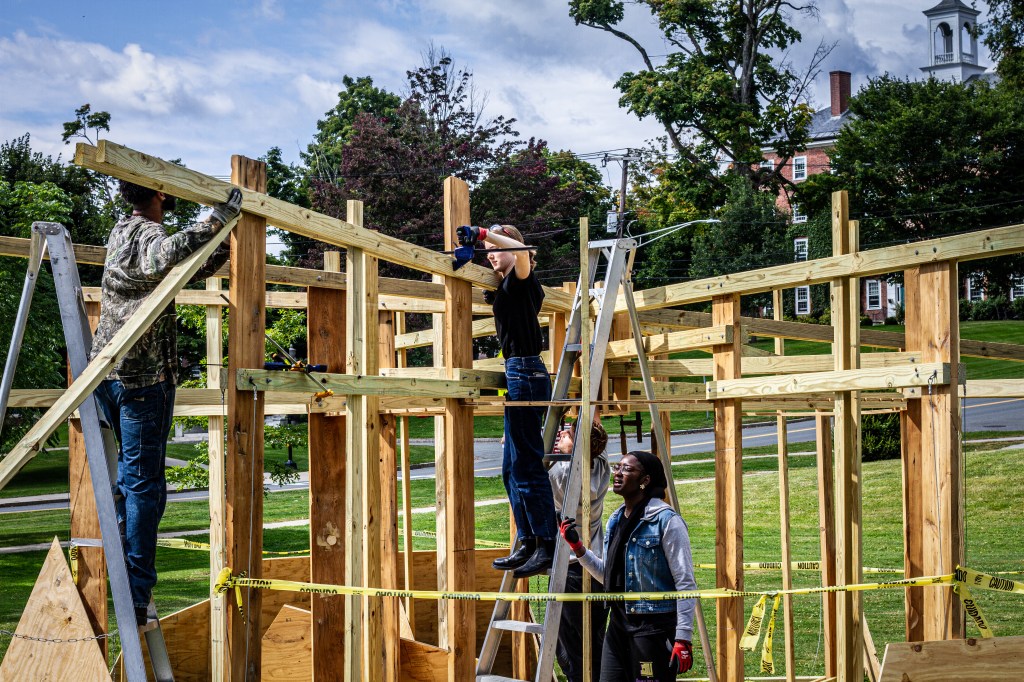
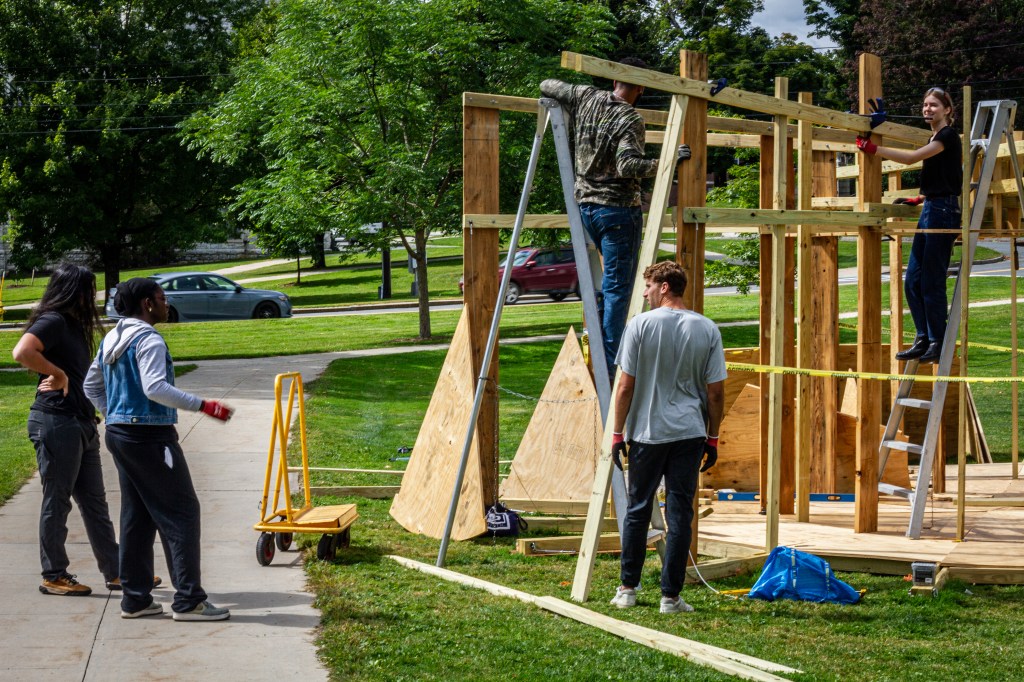
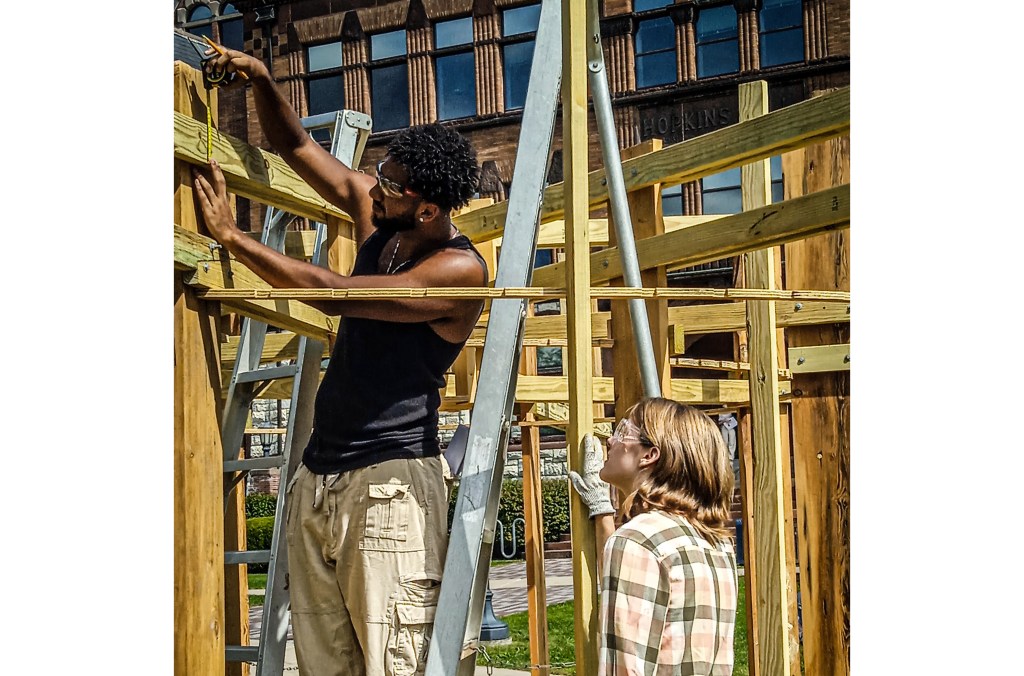
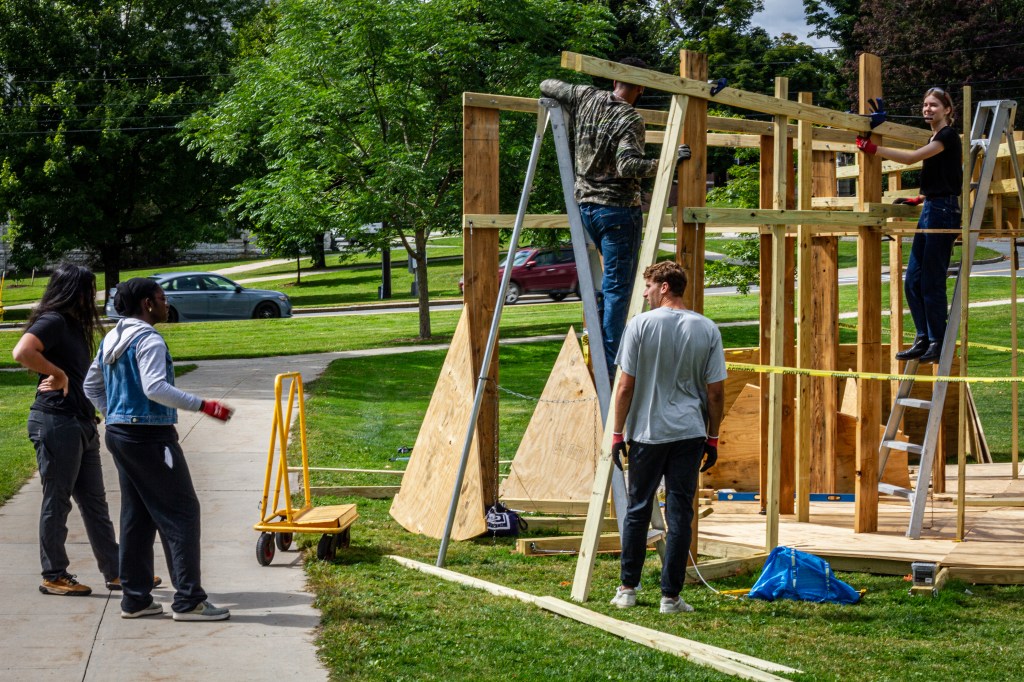
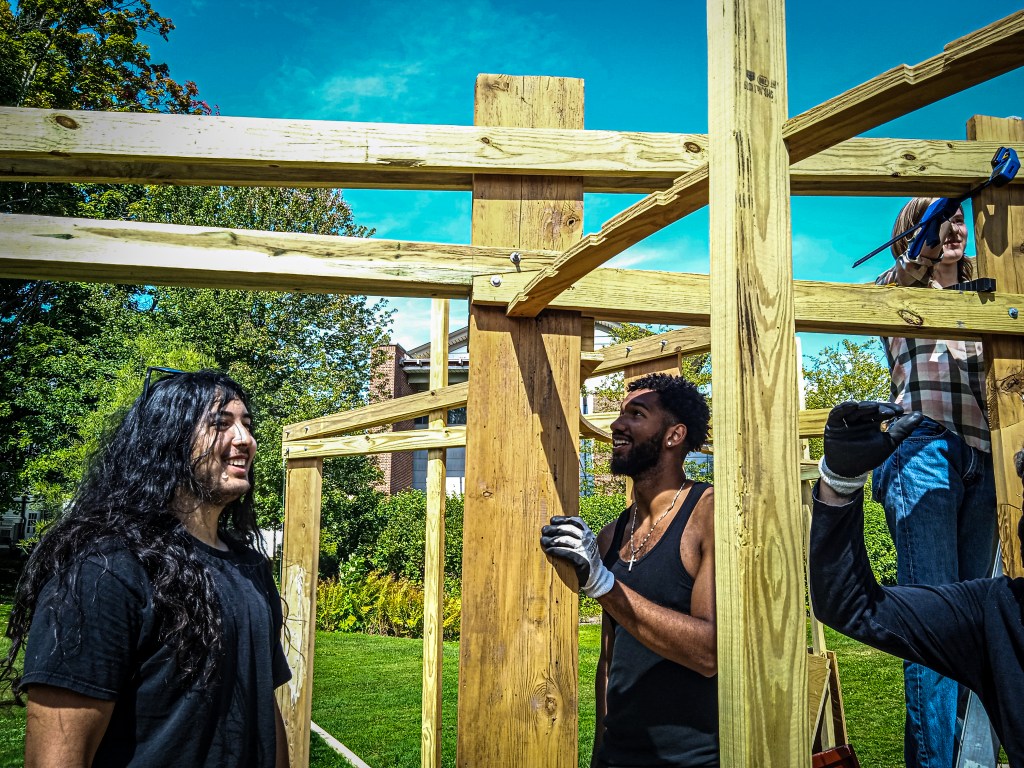
The opening of new sites is often hidden from public view, with construction processes kept behind closed doors until a polished architectural creation is revealed. In contrast, the Pavilion construction was visible to the public, providing insight into the architectural process and turning what could have been a completed structure into a shared experience. By inviting diverse publics to witness the construction, the Pavilion revealed the collaborative effort behind its creation, transforming the act of building into a collective cultural practice.
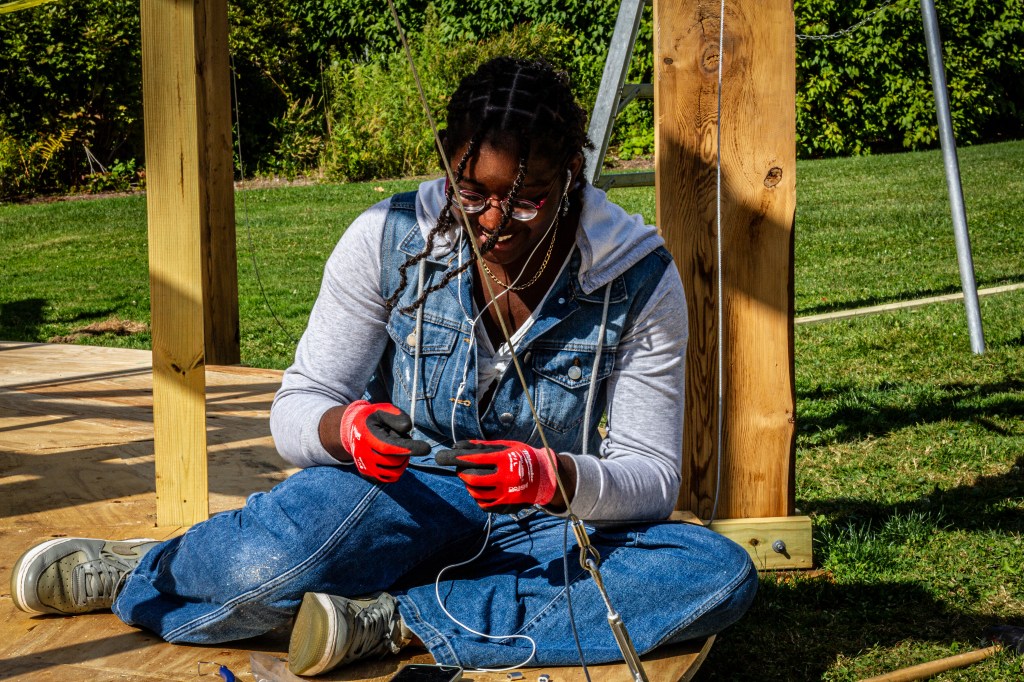
The construction spanned four weeks, immersing students in hands-on learning. They mastered essential tools, interpreted construction plans, and brought their design to life. The most valuable lesson, however, was learning to view their designs through the lens of construction. This taught them how design choices impact the building process, helping avoid errors, wasted materials, and time spent on-site solving issues.
Students faced challenges, such as uneven ground and warped wood salvaged from the 1895 Jenness House. They learned to adapt their plans and make real-time decisions. This flexibility is crucial architectural skill, as paper designs often meet practical limitations.
The installation process required more than just assembling pre-cut pieces; it demanded critical thinking and an understanding of how design interacts with materials. Every cut, twist, and adjustment reinforced the importance of precision, communication, and planning.
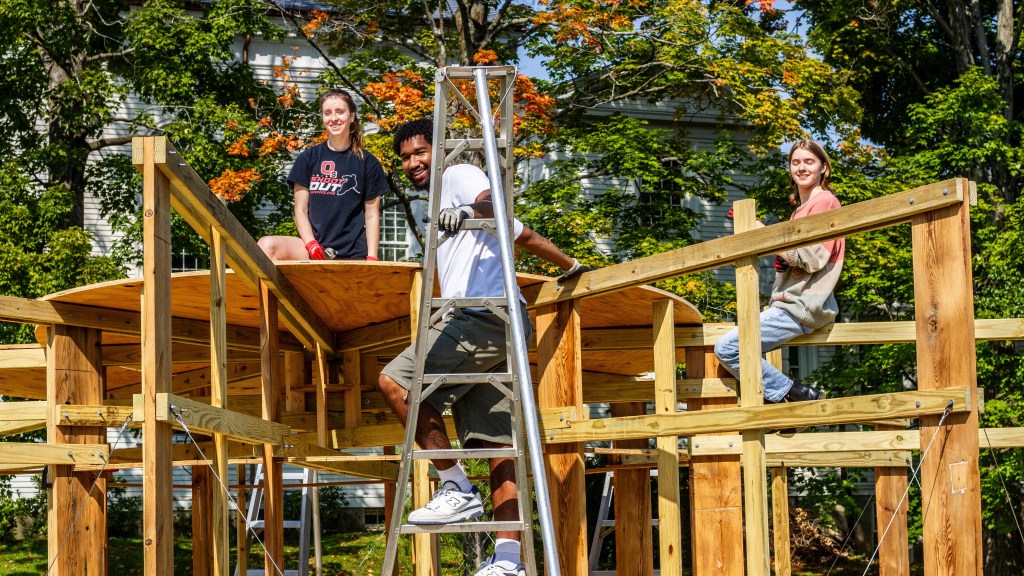
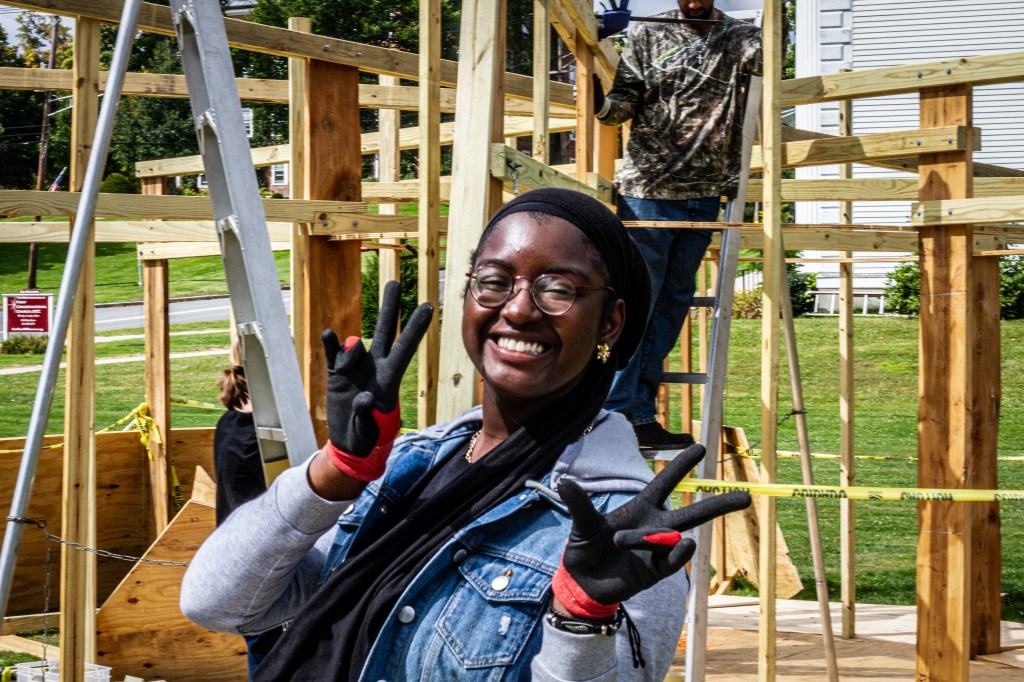
At its core, this project was about more than just construction. It was a collaborative and creative journey that required teamwork, fostering a strong sense of collective achievement among all participants.
 The Pluriverse Pavilion