Living Displays: Reimagining Information Hubs at Sawyer
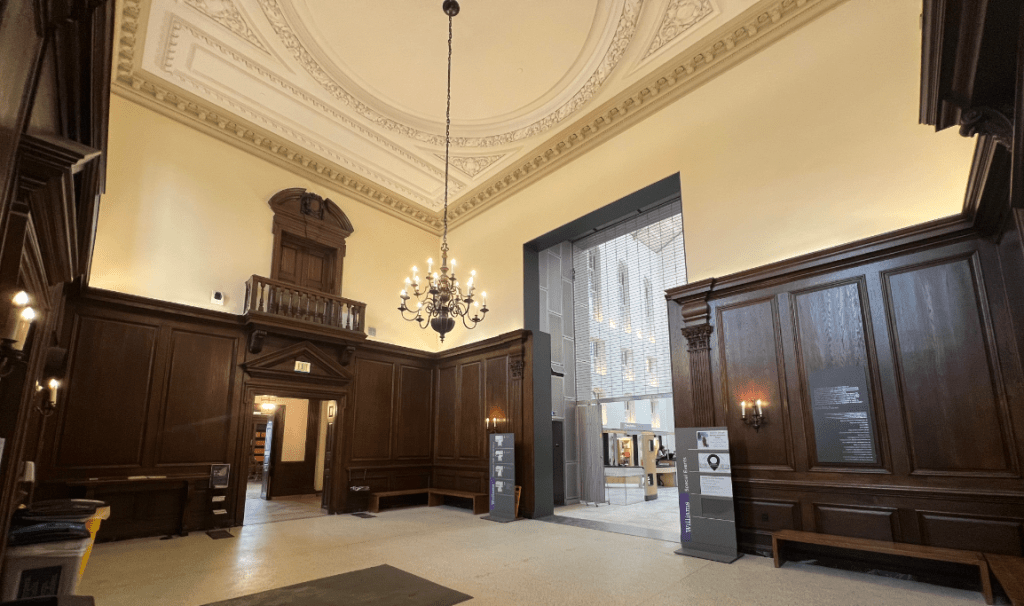
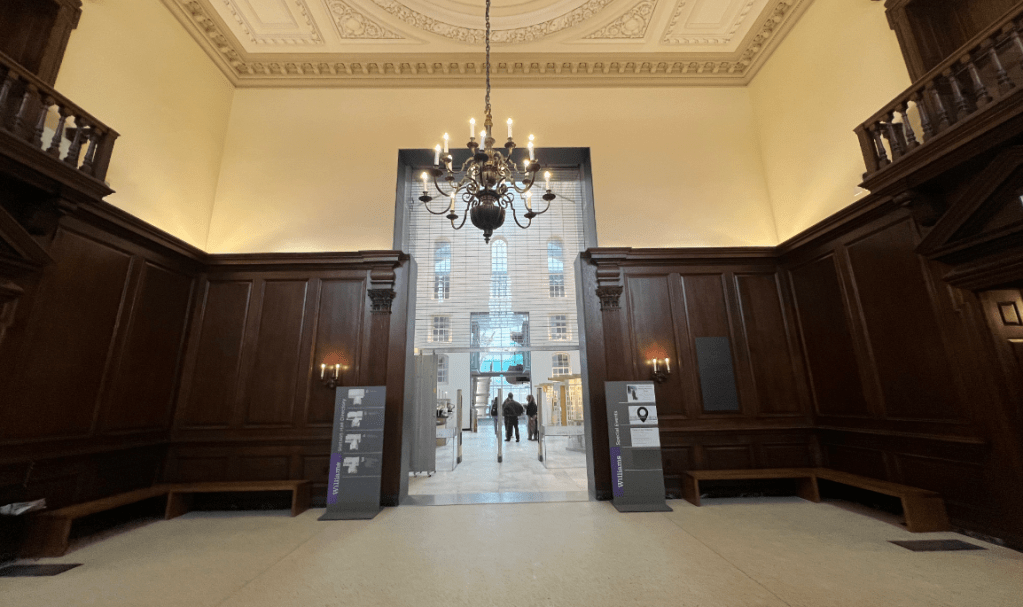
Sawyer Library lobby at Williams, open 24/7
This project proposes the design and construction of display elements to be installed in the Sawyer Library lobby at Williams College. These elements will serve as new communicative infrastructures that enhance the circulation of information in a central campus space.
Designed by students and built using sustainable materials, the intervention seeks to catalyze informal encounters, elevate student work, and reimagine the role of the library as a living, responsive environment. The project contributes to Environmental Studies and Art programs by blending sustainability with using space as a platform for democratic public engagement—it creates “third spaces” where students can engage beyond the classroom.
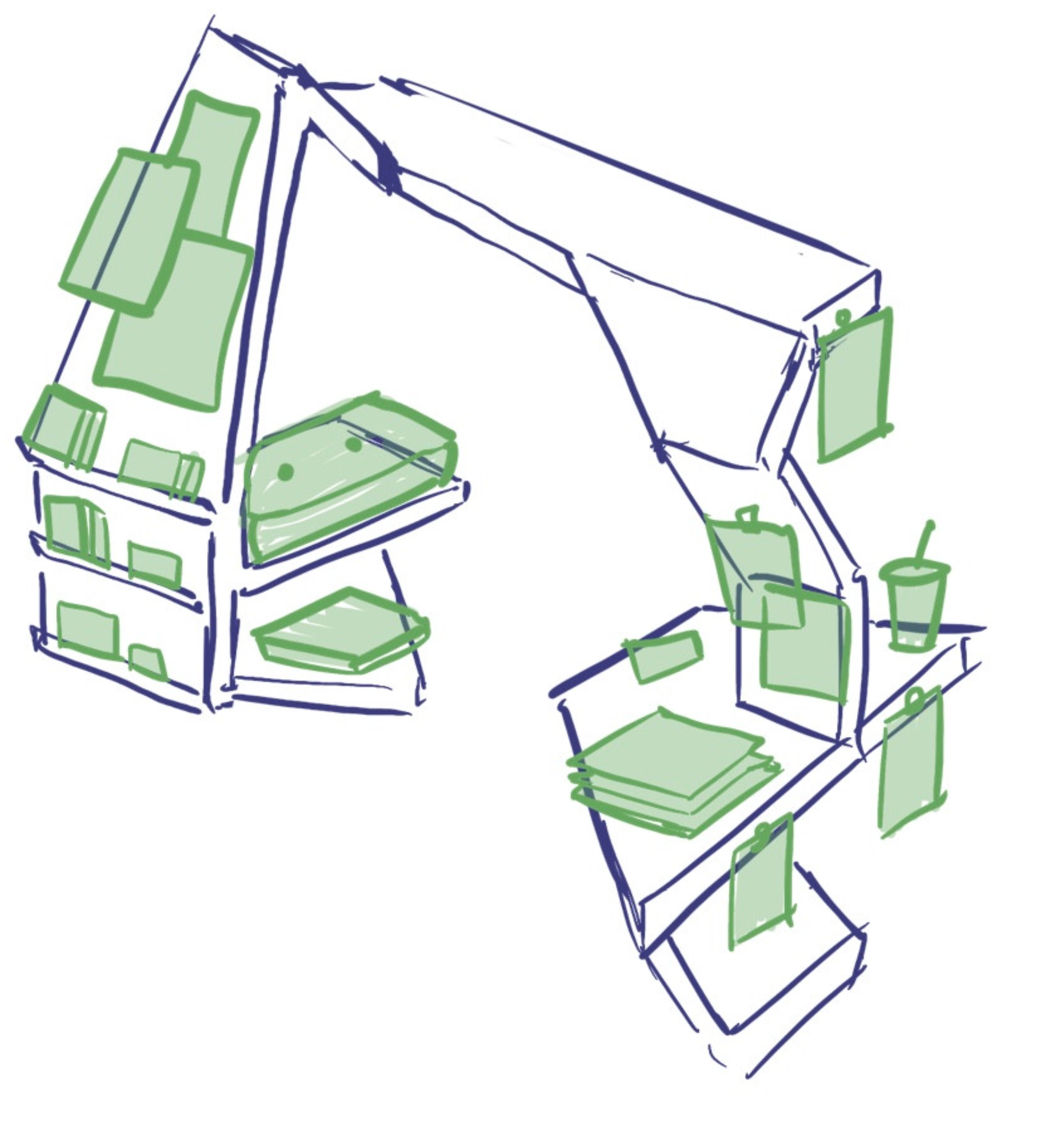
The display elements will derive from a project developed in the architecture tutorial ENVI 264/ARTS 254 Architecture as Politics: Space, Design, Technology by students Lio Otter (Williams ’26) and Xay Dickens (Williams ’26). They will have an intriguing form with intersecting geometries that offer space for attaching posters and messages at varying heights and angles. They are conceived as porous structures that allow visual and bodily interaction. These forms will replace or supplement current poster boards, offering a more dynamic and engaging presence.
In collaboration with Jonathan Miller and Hale Polebaum-Freeman (Sawyer Library) and under the guidance of Prof/Arch. Giuseppina Forte (Williams College) and Arch. Ralf Korbmacher (design developer, and construction coordinator of the Pluriverse Pavilion), students from the Environmental Studies and Art programs will participate in the installation will prototype, refine, and construct these elements during an intensive workshop in June 2025. This work builds on the successful student-led Pluriverse Pavilion project, which was carbon-negative, structurally sound, and helped raise campus awareness of environmentally responsible design.
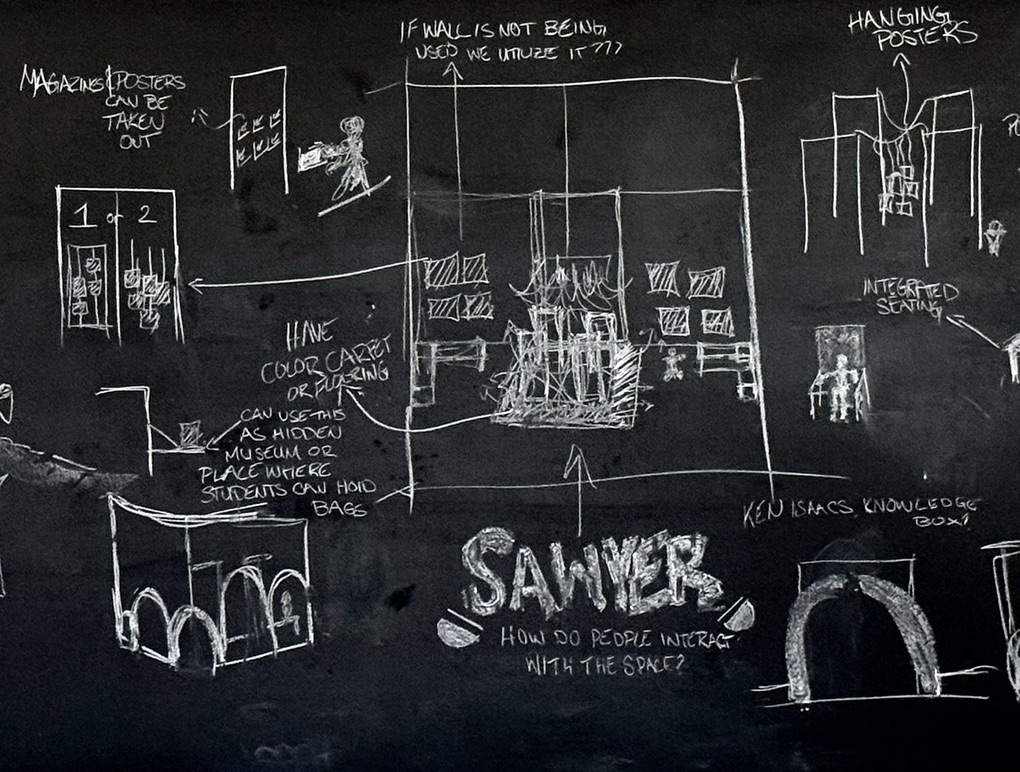
Xay Dickens’ initial sketch
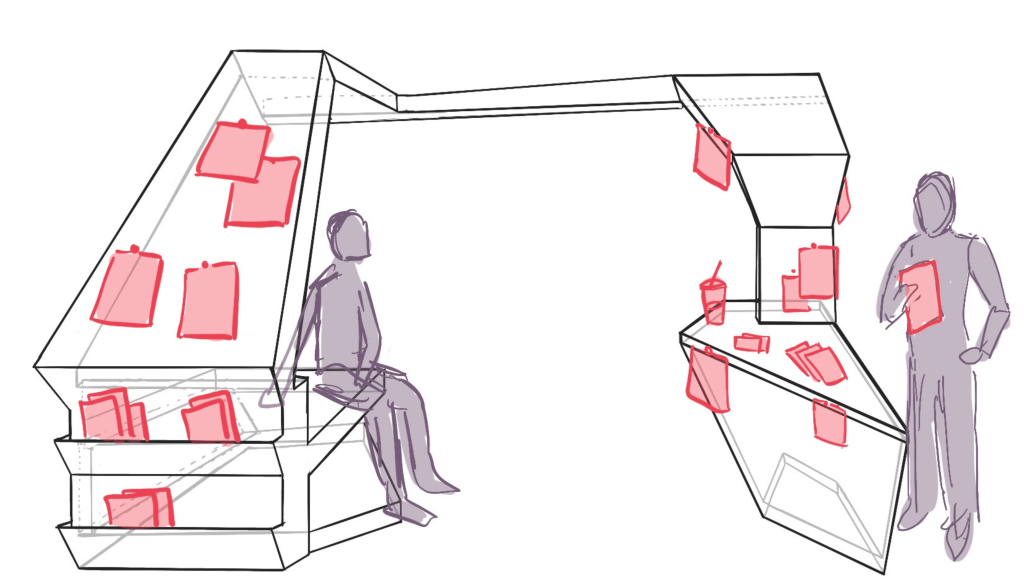
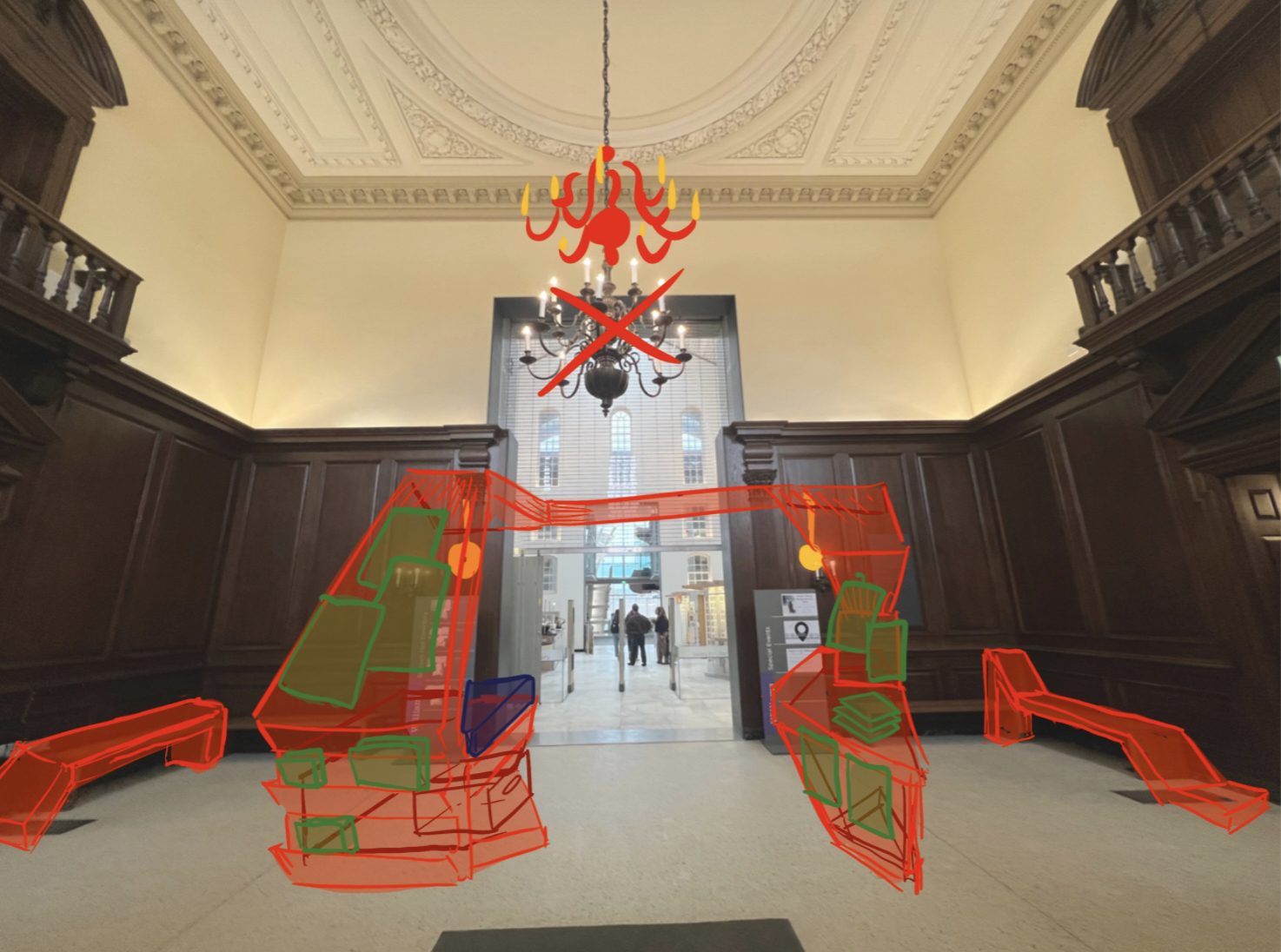
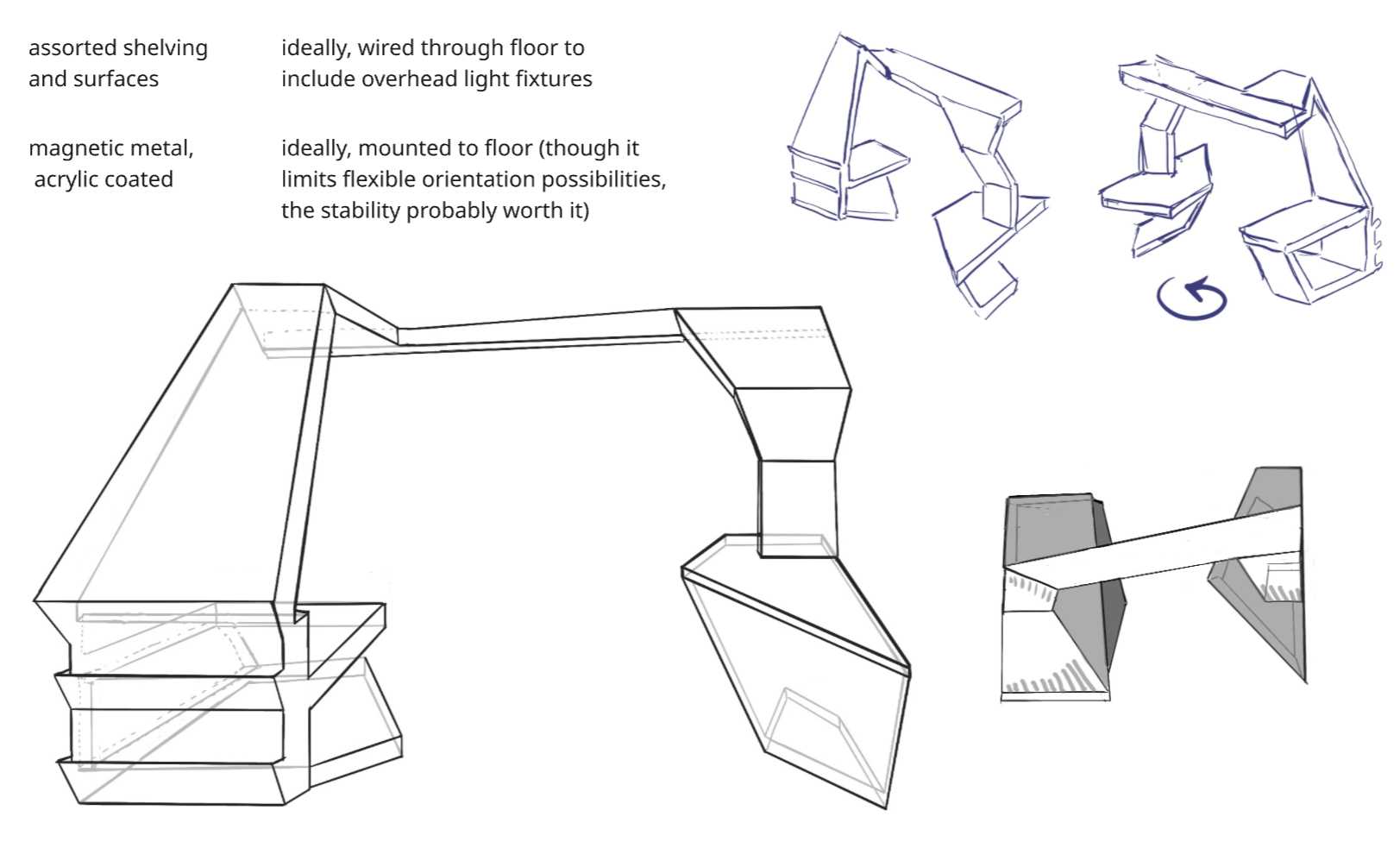
=Lio Otter’s sketches
Civic Engagement and Public Display
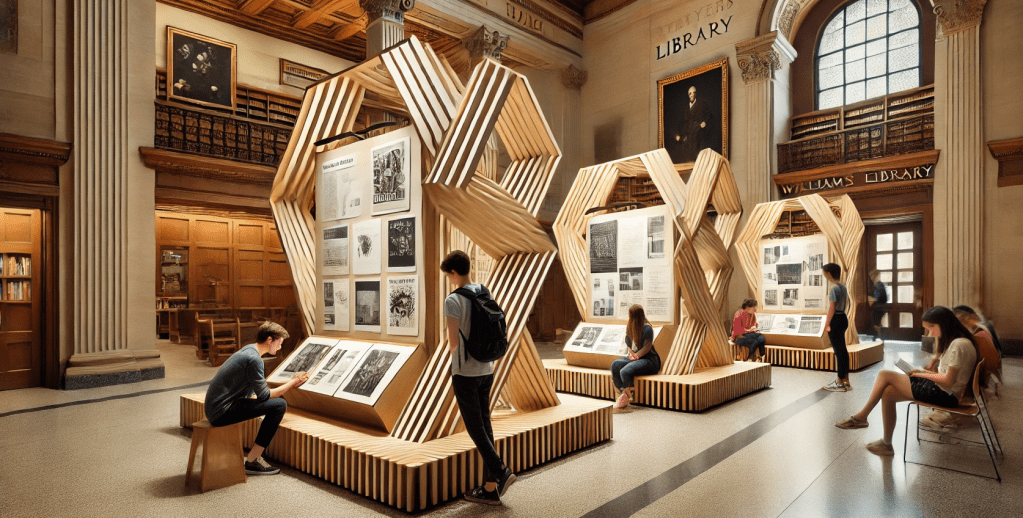
AI simulation – not representative of the final outcome
This project is fundamentally about civic engagement. The Sawyer lobby is a shared site of movement, waiting, and spontaneous exchange. By reimagining it as a communicative hub, the display elements make visible the multiplicity of student voices and campus happenings. They allow posters and zines to circulate not as clutter or afterthought, but as curated, legible contributions to campus discourse.
Moreover, the visibility of the process—student design, build, and installation—models participatory campus transformation. Library staff, including experts in visual and information literacy, will collaborate throughout the design process, helping students reflect critically on how we organize and display information in shared environments. The resulting objects will not only be useful but also prompt reflection on authorship, access, and the politics of visibility.
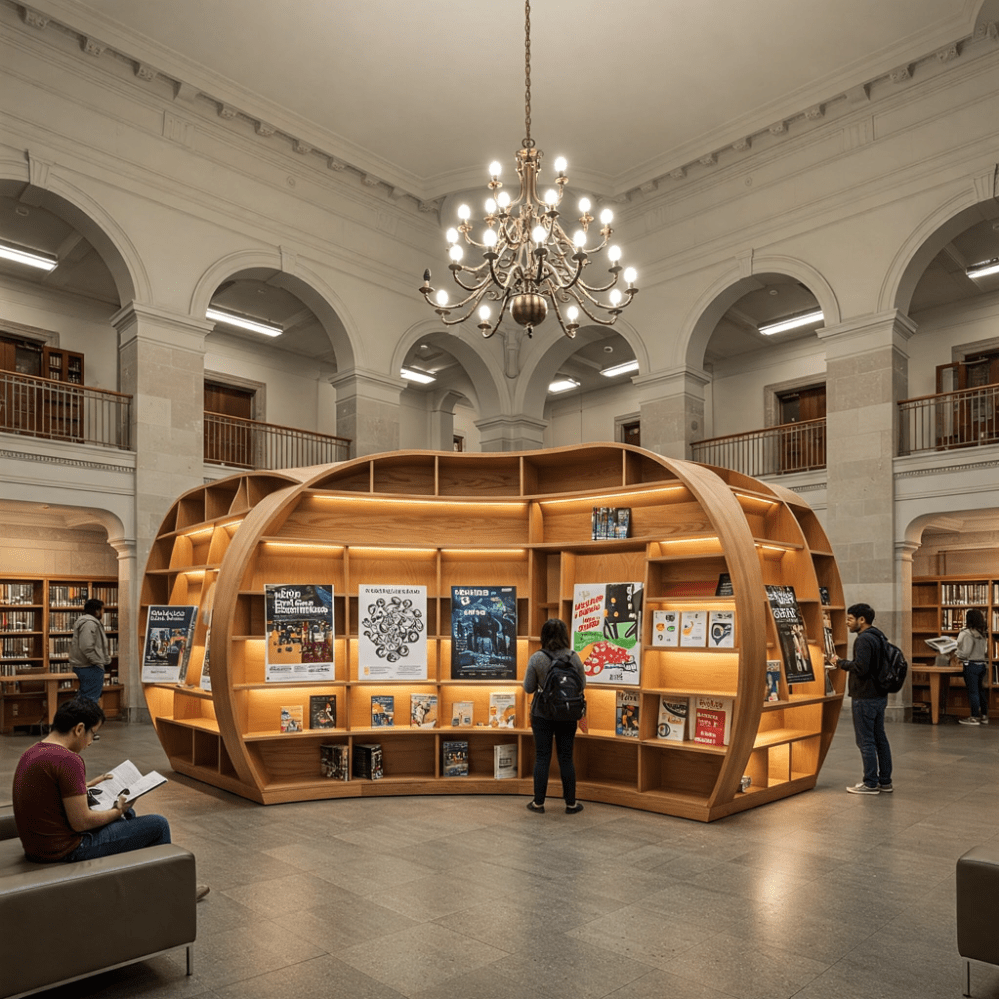
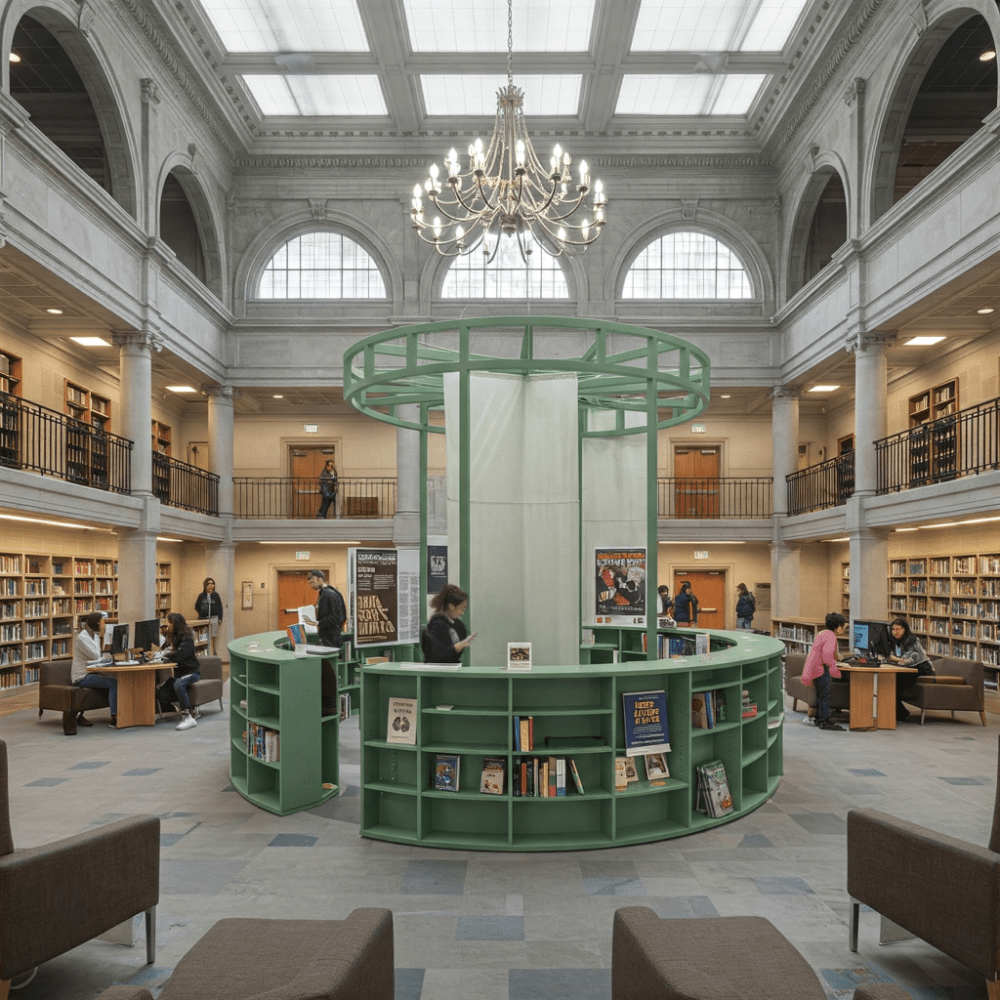
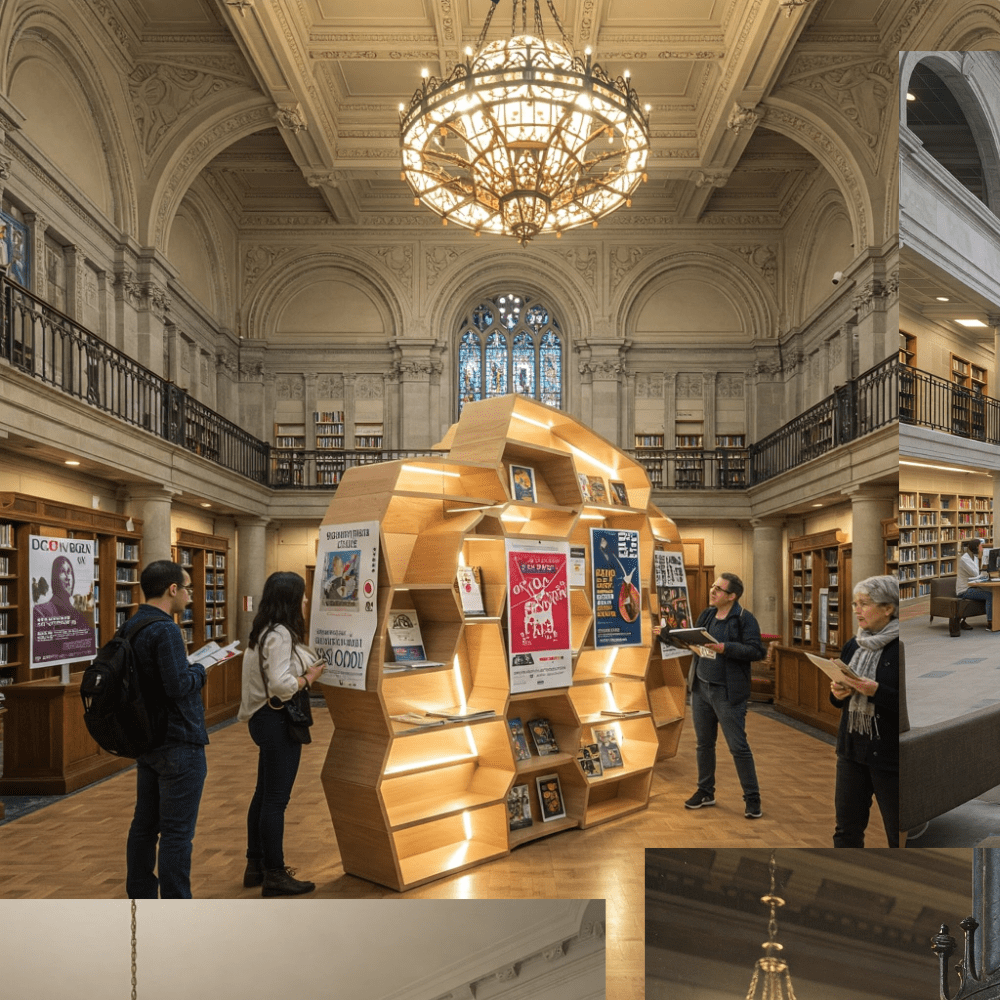
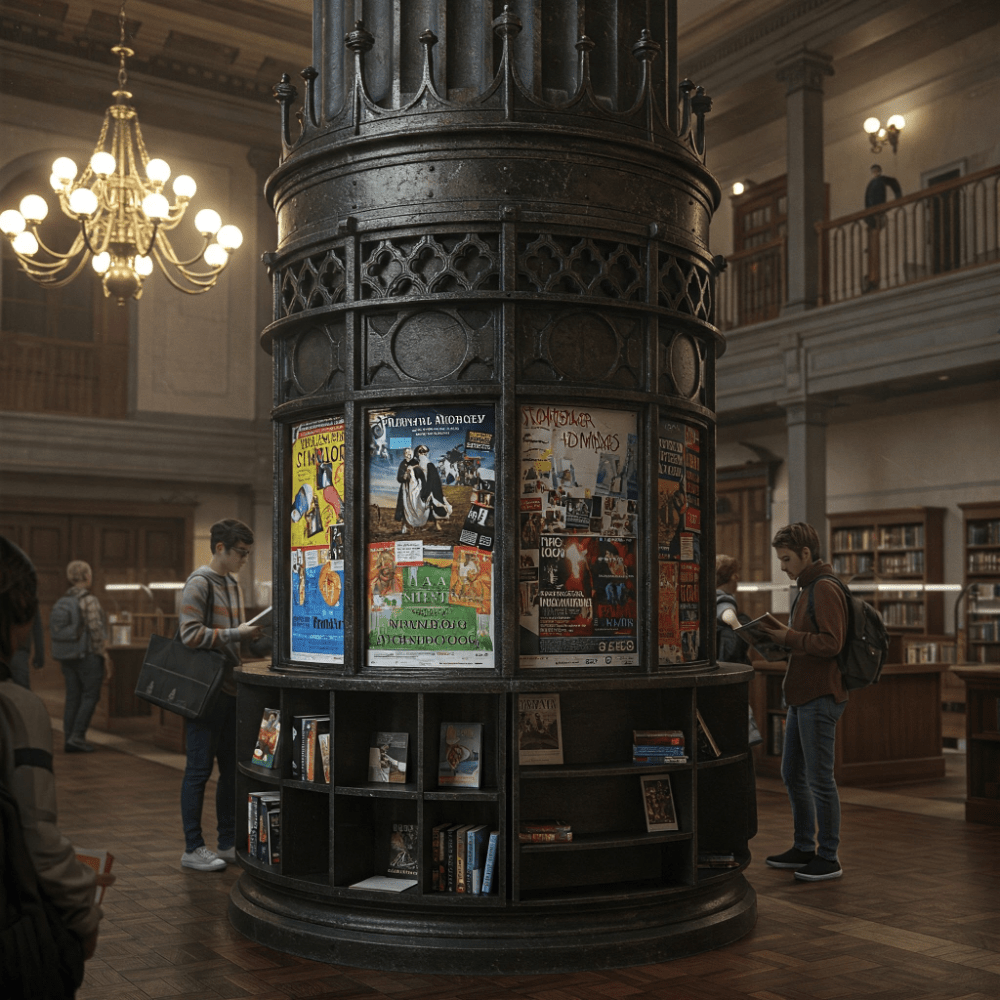
AI simulations – not representative of the final outcome
Layered Voices: A Moving Surface for Collective Curiosity
The students’ proposal introduces a dynamic and experimental communication surface—layered, movable, and always in flux. The design embraces mess, overlap, contradiction, and curiosity. Posters are not flattened into single-purpose announcements. Instead, they create a visual dialogue—intersecting, echoing, interrupting, and sometimes contradicting one another. This is not a bulletin board. It is a living archive of ephemeral student expression.
What if posters did not compete for attention, but sparked unexpected connections? What if visual noise became a map? Fragments of text, drawing, and language form a visual field that resists hierarchy. It invites scanning, tracing, and rereading. You do not just glance at it. You linger. You find meaning in collision. This is the kind of layered communication we envision—a surface that draws people in not just to look, but to wonder.
The project also stages the politics of the poster: Who gets to post? What gets removed? Who decides what counts as “relevant”? These questions animate the design. Instead of a fixed grid, we propose a flexible framework—modular panels or lightweight structures that can shift, rotate, or even travel across the library. Content is clustered by affinity, not authority. New connections emerge through proximity. One poster might nudge attention to another. A string, a clip, a light—each gesture guides the viewer across the field.
Movable, temporary, and changing, this installation resists the idea that communication must be neat to be clear. It embraces contradiction. It invites participation. And it asks: What happens when information becomes encounter?
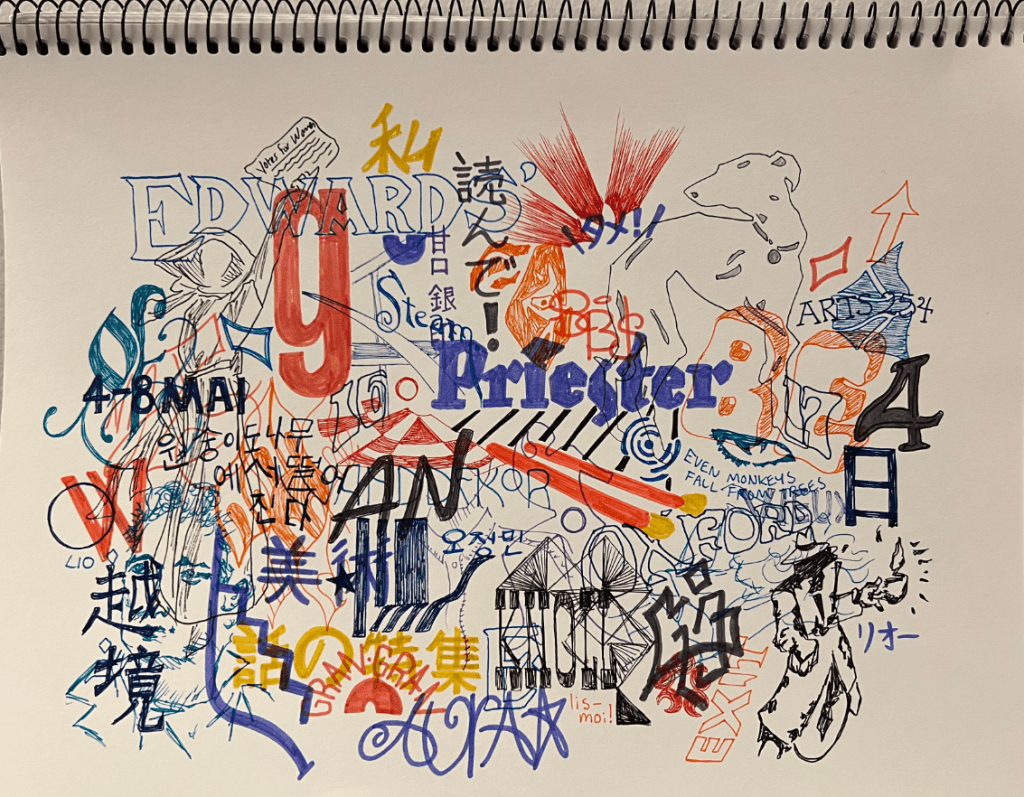
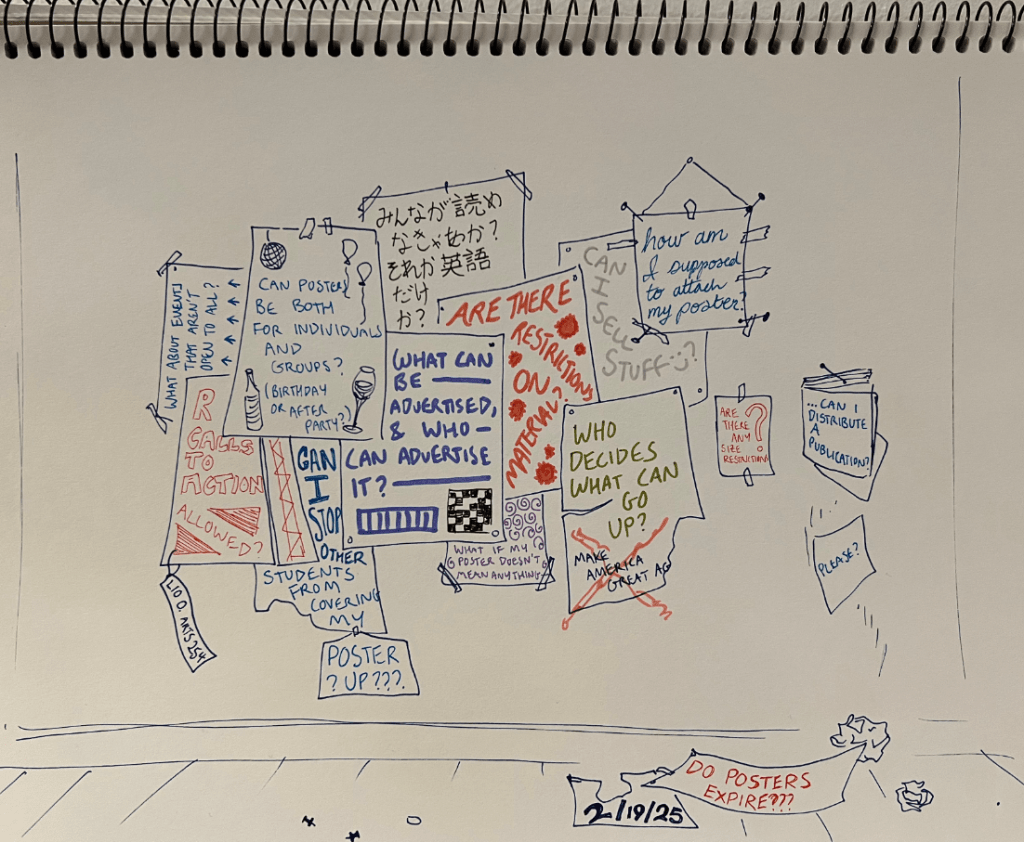
Lio Otter’s drawings
Internship Work Description
During the summer internship, students will work on a design-build workshop focused on reimagining poster displays in Sawyer Library. Students will contribute to the construction phase by assisting with fabrication and installation, ensuring structural integrity, ADA accessibility, and sustainability goals.
The work will include site analysis, meetings with stakeholders, detailed drawings, and physical making using sustainable wood. As part of the workshop, students will also provide a list of materials and operations to calculate the carbon footprint of the displays. The goal is not only to create functional display structures but also to spark conversations about public communication, student authorship, and the design of institutional space.
Integration with Academic Studies and Professional Development
This internship aligns with students’ interest on architecture and environmental studies. It offers a practical application of sustainable design principles, allowing students to explore the intersection of aesthetics, functionality, and environmental responsibility. Engaging in a hands-on project that involves both design and construction will enhance students’ understanding of material properties, structural considerations, and the collaborative nature of architectural projects.
Participating in this project will provide a strong foundation for future professional opportunities, including potential graduate studies in architecture or environmental design. The experience of bringing a concept from initial design through to completed construction is invaluable and will be a significant addition to the students’ professional portfolios.
While this project builds on students’ existing design knowledge, it also offers the opportunity to explore new interests, particularly in the realm of public engagement and the role of architecture in facilitating community interaction. Designing display elements that serve as hubs for information exchange and community interaction will deepen students’ understanding of how physical spaces can influence social dynamics.
Exploration of New Interests
Additionally, collaborating closely with library staff and focusing on the curation and presentation of information introduces an intersection between architecture and information science. This multidisciplinary approach will broaden students’ perspective on the potential applications of design in various contexts.
Supervision and Organizational Support
Throughout the internship, students will receive direct supervision from Ralf Korbmacher, whose extensive experience in architectural design and project management will provide invaluable guidance. Regular meetings with Ralf will ensure that the project progresses smoothly and that any challenges are promptly addressed.
Collaboration with library staff will offer insights into the informational needs of the community, informing the functionality of the display elements.
Position Description
The intern will work on the Position Description provided by the Organization. They will collaborate with other students on a project aimed at reimagining the poster displays in Sawyer Library. Responsibilities include:
- Assisting in the construction and installation of the display elements, with a focus on sustainable practices and materials.
- Documenting the design and construction process for future reference and potential publication.
- Facilitating the design process, including sketching, modeling, and prototyping.
- Coordinating with library staff, Facilities, and other stakeholders to ensure alignment with institutional goals and compliance with safety and accessibility standards.
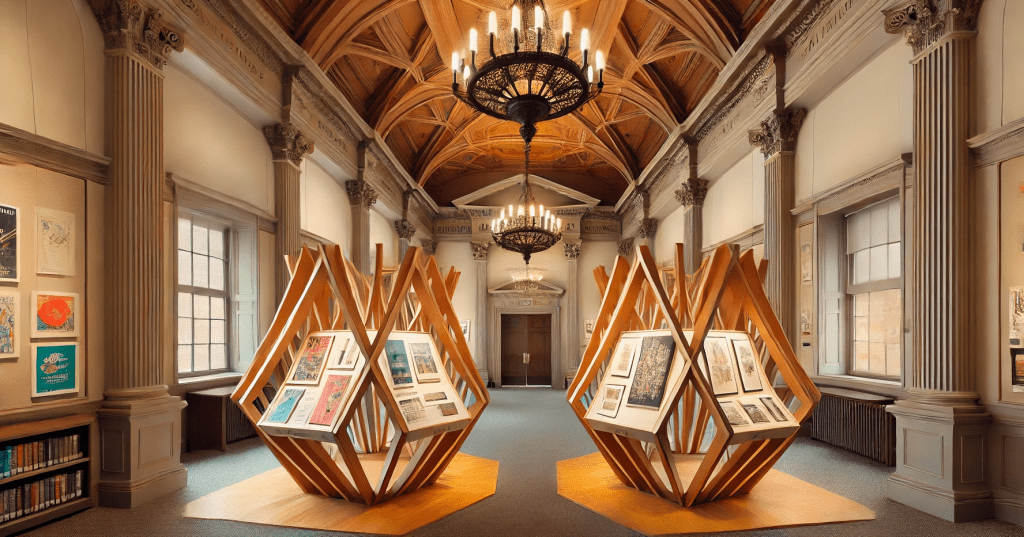
AI simulation – not representative of the final outcome
References
Field, Jeffrey. 2021. “Tactical Urbanism and Temporary Structures in Educational Spaces.” Journal of Architectural Education 75 (1).
Gresham Smith. 2024. “Empowering Communities Through Participatory Urban Design.”
Hou, Jeffrey. 2013. “The Social Practice of Participatory Design in the Making of Union Point Park.”
Mahabadi, Seyed Mohammad, and Hossein Zabihi. 2022. “Participatory Design: A New Approach to Regenerate the Public Space.”
Rethinking The Future. 2020. “10 Sustainable Materials Every Architect Must Know.” Rethinking The Future.
Rames, Céline, María L. Carbassé, Lisa Karrasch, and Rosa Garcia Casas. 2022. “Teixint Superilles: A Grassroots Project of Participatory Design for Inclusive Public Spaces.” In DRS2022: Bilbao, 25 June – 3 July, edited by Dan Lockton, Stefano Lenzi, Paul Hekkert, Amanda Oak, José Sádaba, and Peter Lloyd.
Thet, Hein. 2023. “11 Sustainable Building Materials for a Greener Future.” Novatr.
United Nations Development Programme. 2021. “Public Space Design with Participatory Methods: A Multi-Partner Learning Experience.”
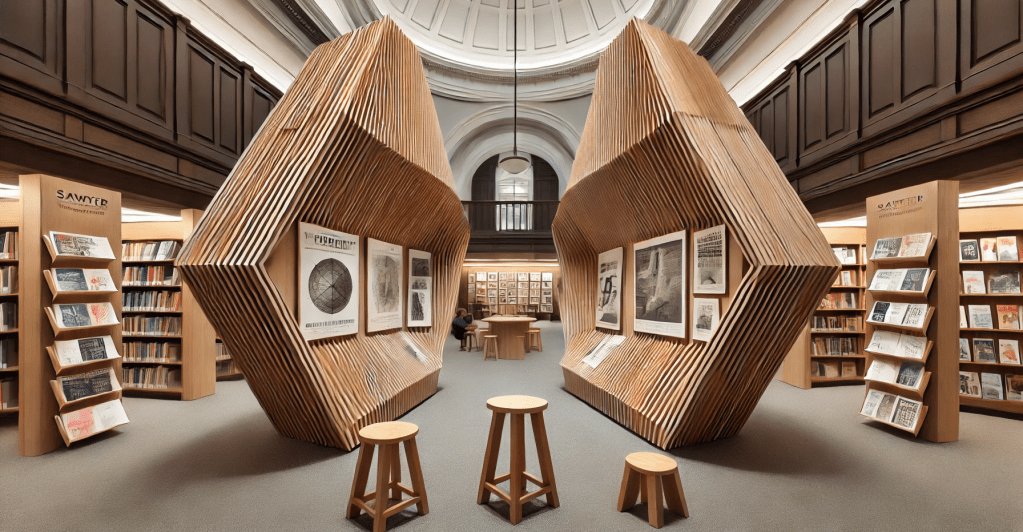
AI simulation – not representative of the final outcome
 The Pluriverse Pavilion